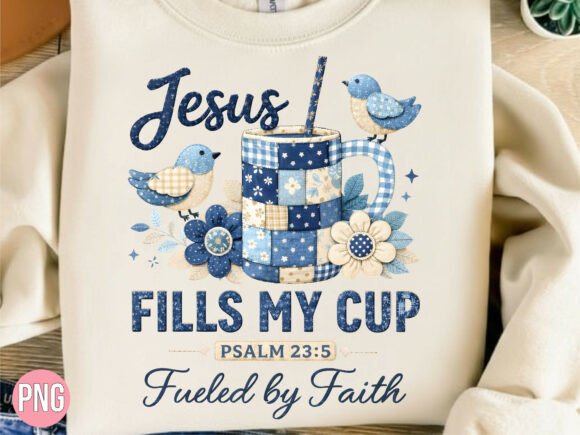
Jesus Fills My Cup Faith Coffee PNG
A Designer’s First Look: Warm, Quiet, and Ready for Real Stitching
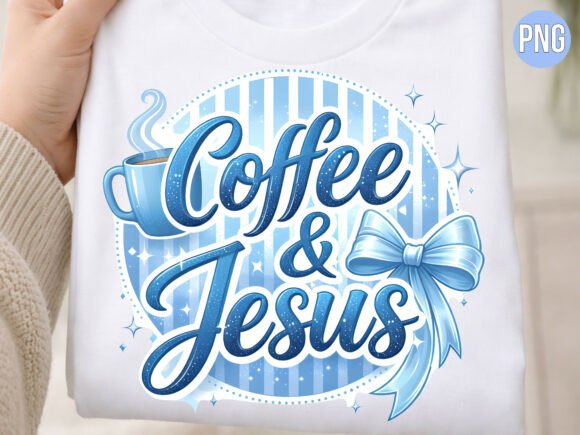
When I opened Jesus Fills My Cup Faith Coffee PNG for the first time, I didn’t see just another faith-based motif—I saw a design with quiet intention. It’s not loud or overly ornate; it leans into soft curves, balanced negative space, and gentle typographic rhythm. The coffee cup sits center-frame, grounded but not heavy, with “Jesus Fills My Cup” arcing above it like steam rising—subtle, warm, and unmistakably devotional. This isn’t a design shouting from a billboard. It’s the kind you’d stitch onto a linen tea towel for a new mom’s baby shower, or embroider on a cozy oversized sweatshirt for a church volunteer gift. Its personality feels handmade—not mass-produced—and that’s its strongest asset.
Where It Lives Best: Real Projects That Let It Shine
I recently prepped a batch of custom embroidered tote bags for a local women’s Bible study group—and Jesus Fills My Cup Faith Coffee PNG was my top pick for the front panel. Why? Because it scaled beautifully at 4.2 inches wide, held clarity in both satin-stitched cup outlines and delicate fill-stitched lettering, and read clearly even at arm’s length. It worked equally well on natural canvas (with medium-weight cutaway stabilizer) and midweight cotton twill. I also tested it on a lightweight baby onesie—using tear-away stabilizer and reduced stitch density—and the result felt tender, not stiff. As a T-Shirt Designs asset, it’s especially strong for relaxed-fit crewnecks and unisex sweatshirts where comfort and message harmony matter more than flash.
It’s also a natural fit for holiday embroidery: think embroidered pillow covers for Thanksgiving hostess gifts, or small patches sewn onto knit blankets for nursing home ministry outreach. I’ve used it as a focal point on aprons for Christian kitchenware shops—and customers consistently comment on how “peaceful” and “uncluttered” it feels compared to busier faith motifs.
Where to Pause Before Pressing Start
This design isn’t built for every surface—or every expectation. On highly textured fabrics like bouclé or thick terry cloth, the fine interior details (like the subtle steam swirl or thin cup handle outline) can blur. On stretchy fabric—especially lightweight jersey—it needs careful hooping and a light fusible + tear-away combo, or the lettering may pucker. And while the coffee cup shape is forgiving on curved surfaces, I wouldn’t recommend it for the front of structured caps without adjusting placement and possibly simplifying the lower curve for better hoop clearance.
Also worth noting: the lettering is elegant but narrow. Below 3 inches wide, some characters begin to lose legibility in fill stitch—so avoid tiny hoop sizes (<3.5") unless you’re stitching on stable, non-washable items like framed keepsakes. For dark fabric, test thread contrast early: a creamy ecru or warm tan works better than stark white for warmth and readability. And if your finished product will face frequent washing—like kitchen towels or baby bibs—confirm stitch density isn’t so high that it creates stiff, abrasive zones.
What It Adds to Your Handmade Product—Beyond the Thread
Jesus Fills My Cup Faith Coffee PNG elevates perceived value without demanding premium pricing. It reads as thoughtful, not generic—a detail that builds customer trust, especially among buyers seeking meaningful, non-commercialized faith expressions. For Etsy sellers and small shop owners, it supports brand consistency across product lines: use it on a mug sleeve, then echo the same cup shape in a printable mockup for social media, and finally stitch it onto matching napkins. That cohesion signals professionalism, not patchwork sourcing.
Giftability improves too. People don’t just buy embroidered coffee-themed designs—they buy the feeling behind them. This one lands softly: comforting, grounded, spiritually resonant without being prescriptive. I’ve watched customers pause longer over it at craft fairs than over bolder slogans. That extra second of connection? That’s buyer engagement you can’t fake.
Practical Embroidery Designer Notes You’ll Actually Use
- Always test first—on scrap fabric *and* your exact stabilizer combo. Even slight tension shifts change how the cup’s rim reads.
- Check thread color contrast before final hooping. Try matte cotton threads instead of high-sheen poly for a softer, more artisanal look.
- Review stitch density—if your machine defaults to dense fills, reduce by 10–15% for breathable wearables like tees and baby clothes.
- Confirm hoop size compatibility. While the design fits standard 4x4 hoops comfortably, verify alignment markers match your machine’s auto-hooping system if using one.
- Inspect small details in your embroidery software: zoom in on the steam line and cup base. If they appear jagged or overly segmented, your file may need smoothing or re-digitizing.
- Test black-and-white mockups—this design relies on shape and rhythm more than color, so grayscale previews reveal clarity issues fast.
- Compare light vs. dark backgrounds in your digital preview. Some faith-based buyers prefer earth tones or navy over pure black—know what resonates with your audience.
- Use proper stabilizer: cutaway for knits and stretchy fabrics, tear-away for stable wovens, and lightweight fusible + tear-away for delicate items like baby onesies.
- Verify licensing before selling finished products or bundling the machine embroidery design into digital product kits. If commercial use isn’t explicitly permitted, reach out to the creator before listing on Etsy or your small shop site.
Final Thought: A Design That Serves the Message—and the Maker
Jesus Fills My Cup Faith Coffee PNG doesn’t try to be everything. It’s not flashy enough for streetwear drops, nor intricate enough for heirloom samplers. But within its lane—thoughtful, wearable, spiritually warm faith expression—it delivers with integrity. It stitches cleanly, sells steadily, and invites repeat use across seasons and product types. Whether you’re an embroidery designer building a cohesive collection, a craft business owner curating boutique merchandise, or a maker stitching personalized gifts for friends and family, this design earns its place in your working library—not as filler, but as a quiet, reliable voice in your creative toolkit.